

Introduction
Jerky or harsh gear changes are one of the most common complaints from drivers of DSG-equipped vehicles. In many cases, this is the first sign that something within the transmission is starting to go wrong.
This issue is widely reported across VW, Audi, SEAT and Škoda models fitted with DSG gearboxes, including the DQ200, DQ250, DQ381 and DL501 transmissions.
While some level of shift feel is normal with dual clutch gearboxes, excessive jolting, hesitation or aggressive engagement is not. These symptoms usually indicate a fault developing within the clutch system, mechatronic unit or adaptation values.
Quick Symptoms
- Harsh or aggressive gear changes, especially at low speeds
- Jerking when pulling away from a standstill
- Hesitation before engaging drive or reverse
- Sudden engagement when selecting gear
- Inconsistent shifting behaviour
- Vehicle feels like it is “snatching” between gears
Q: Is jerky shifting normal for a DSG gearbox?
A: Slight firmness can be normal, but noticeable jolting or inconsistent behaviour is not and usually indicates a developing fault.
Q: Will this problem get worse?
A: Yes. These symptoms typically worsen over time and can lead to more serious gearbox faults if ignored.
If you are noticing any of these behaviours, it is best to have the vehicle diagnosed early.
What Drivers Commonly Report
Many drivers report that the vehicle feels rough when driving in traffic or during stop-start conditions. The gearbox may feel smooth at higher speeds but becomes unpredictable at lower speeds.
A common description is a “kangarooing” effect when pulling away, or a sudden jolt when the gearbox shifts between gears. Some drivers also notice hesitation followed by a harsh engagement when selecting drive or reverse.
In some cases, the issue appears intermittently at first, then becomes more frequent as the fault develops.
Common Fault Codes
Not all cases will log fault codes immediately, but where codes are present, they often relate to clutch control or pressure regulation. Examples include:
P17BF – Hydraulic pump protection
P1895 – Pressure loss
P0841 – Hydraulic pressure sensor implausible signal
P17D8 / P17D6 – Clutch temperature or pressure issues
P176E / P175D – Clutch control faults
These codes can indicate underlying issues with pressure control, clutch operation or mechatronic performance.
Technical Explanation
DSG gearboxes rely on precise control of clutch engagement and hydraulic pressure to achieve smooth gear changes.
Each gear change is controlled by the mechatronic unit, which regulates:
- Clutch engagement timing
- Hydraulic pressure
- Gear selection via solenoids
When any of these parameters fall outside of expected values, the gearbox can no longer deliver smooth transitions between gears.
It is also important to understand that not all jerking or harsh shifting originates from the gearbox itself.
A worn dual-mass flywheel (DMF) is a very common cause of these symptoms across all DSG variants, including both dry clutch (DQ200) and wet clutch systems (DQ250, DQ381, DL501).
As the DMF wears, it can no longer absorb drivetrain vibrations effectively. This results in:
- Increased vibration during clutch engagement
- Judder when pulling away
- Harsh or aggressive gear changes
Because the DSG relies on smooth torque transfer between engine and gearbox, any instability from the flywheel is felt directly through the transmission.
DQ200 (0AM / 0CW) – Clutch Wear and Adaptation Issues
On DQ200 gearboxes, jerky shifting is commonly linked to clutch wear, incorrect adaptation values, or flywheel condition.
Typical causes include:
- Worn dry clutch packs
- Incorrect clutch bite point calibration
- Pressure inconsistencies within the mechatronic unit
- Worn dual-mass flywheel
Because this gearbox uses dry clutches, it is more sensitive to wear and driving style. As components wear, the gearbox struggles to engage smoothly, resulting in judder or harsh take-off.

DQ381 (0GC) – Pressure Regulation and Control Faults
On newer DSG units such as the DQ381, jerky shifting is more commonly related to pressure regulation faults within the mechatronic unit, but the flywheel still plays a key role in overall drivability.
This can include:
- Inconsistent clutch pressure control
- Solenoid valve performance issues
- Incorrect feedback from pressure sensors
- Worn dual-mass flywheel affecting engagement smoothness
When clutch pressure is not controlled correctly, or torque delivery is unstable, the result is:
- Delayed engagement followed by a harsh shift
- Inconsistent gear changes
- Intermittent jerking under load

DL501 (0B5) – Solenoid, Control and Flywheel Influence
On DL501 longitudinal DSG gearboxes, harsh shifting is often linked to internal mechatronic faults, but the dual-mass flywheel is also a critical factor.
Common causes include:
- Pressure control solenoid faults
- Valve operation issues
- Circuit board faults affecting clutch control
- Worn dual-mass flywheel
Because this gearbox manages higher torque levels, any instability from the flywheel can significantly affect how the clutches engage, leading to:
- Abrupt gear engagement
- Hesitation followed by a jolt
- Irregular shifting patterns

Can You Drive With This Fault
In most cases, the vehicle will remain drivable in the early stages.
However, continuing to drive with jerky or harsh shifting can lead to:
- Increased clutch wear
- Overheating of clutch components
- Further damage to the mechatronic unit
- Additional strain on the dual-mass flywheel
- Progression into limp mode or loss of drive
It is always recommended to diagnose the issue early before it develops into a more serious failure.
Repair Options
The correct repair depends on identifying the root cause.
Common repair routes include:
- Clutch replacement (especially on DQ200 units)
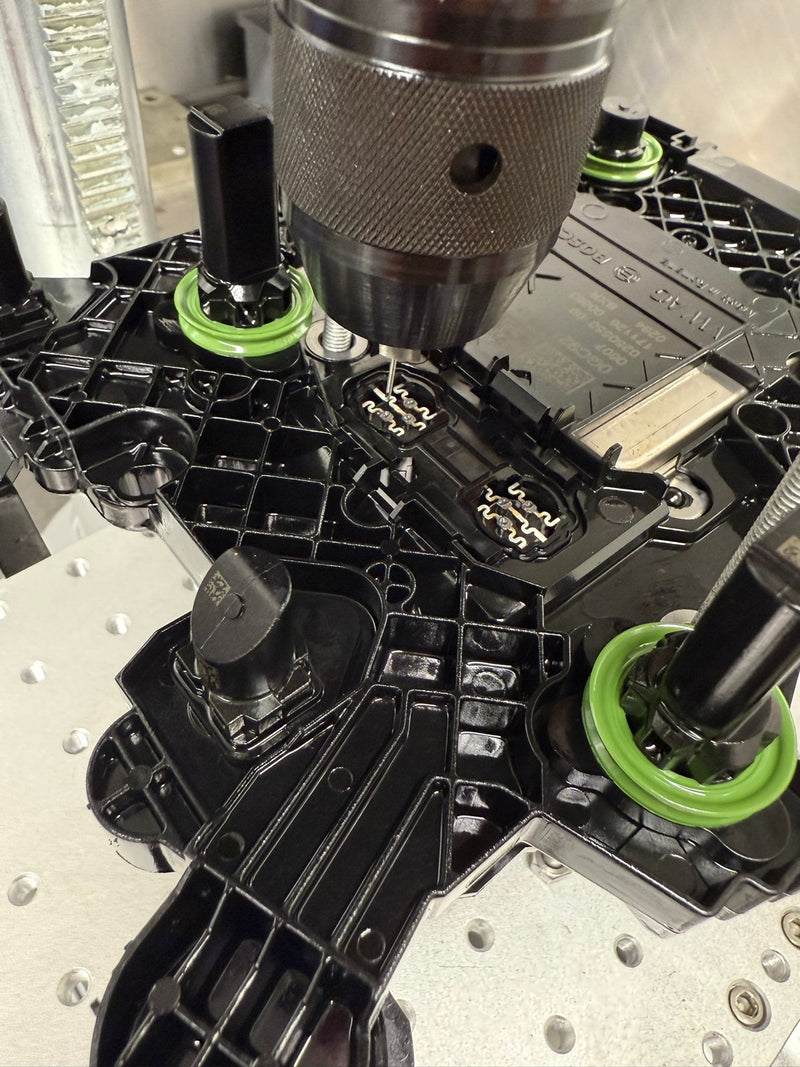
- Mechatronic repair or replacement
- Solenoid or pressure control repairs
- Replacement of the dual-mass flywheel where worn
- Clutch adaptation and calibration using diagnostic equipment
At Eco Torque, we carry out full DSG diagnostics to determine whether the issue is mechanical, hydraulic or electronic — and whether the flywheel is contributing to the fault — before recommending the correct repair.
Final Thoughts
Jerky or harsh shifting is one of the earliest warning signs of a DSG gearbox problem. While the vehicle may still be drivable, these symptoms should not be ignored.
It is also important to consider that not all issues originate from the gearbox itself. Components such as the dual-mass flywheel play a key role in how smoothly the transmission operates.
Addressing the issue early can prevent more serious faults, reduce repair costs and restore smooth gearbox operation.
Parts for this repair
We stock the parts for this job and ship them from our Arlesey workshop. Not sure which gearbox you have? Send us your registration and we will confirm it before you order.
- All DSG parts — 201 lines across the DSG range
- DSG mechatronic units — 13 mechatronic units and TCMs listed
- DSG clutch and flywheel — 22 clutch and flywheel lines
- DSG service parts — 38 service lines — oil, filters, gaskets
Eco Torque Contact Details
If your DSG gearbox is showing signs of jerking or harsh shifting, contact our team for expert advice and repair options.
Eco Torque Ltd
Unit 1A Portland Industrial Estate
Hitchin Road
Arlesey
SG15 6SG
Telephone: 01462 835335
Email: info@eco-torque.co.uk
Are you experiencing DSG Gearbox issues, join the discussion on our forum here.